Monuments & Landmarks in Rome
The Colosseum: worth the hype?
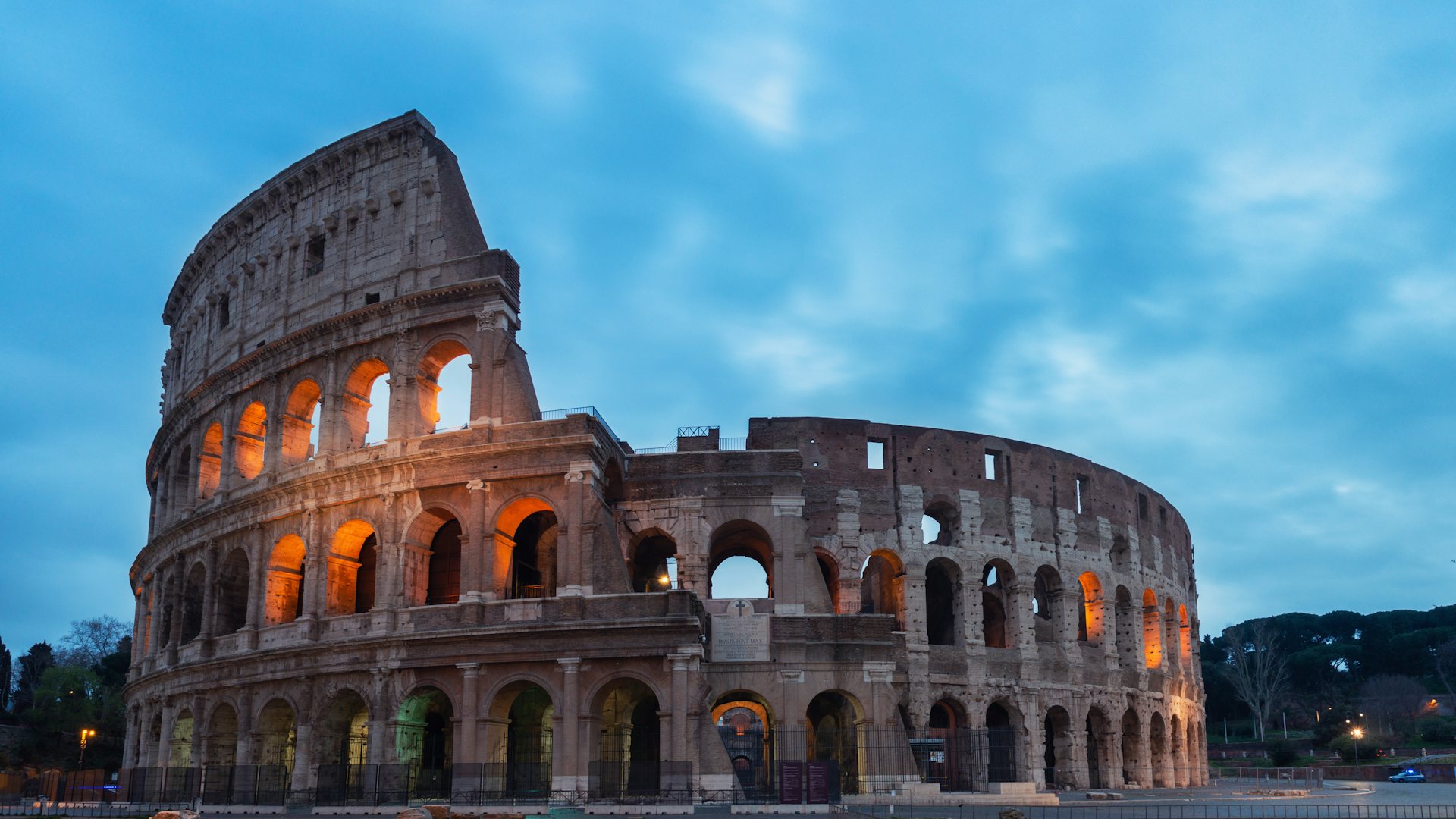
Yes, but go early. The Colosseum is the most visited monument in Europe, so expect crowds. Built in 80 A.D., it once held 50,000 spectators for gladiator fights and wild animal shows. Adult tickets cost €18 for a standard entry, €22 if you include the Roman Forum and Palatine Hill (all one combined ticket).
Skip the official queue. Buy online 7 to 10 days ahead via coopculture.it. Expect 90 minutes at the gate without a pre-booked slot, versus 15 minutes with one. Opening time is 8:30 a.m. year-round.
Reality check: the ground level is often closed for restoration. You'll see most of the interior from the first and second tiers anyway, so don't pay extra for a guide unless you want historical detail beyond the plaques. The actual view of Rome from the top tier is blocked by modern safety netting, which is disappointing. A trained eye needs 45 minutes inside. Give yourself 2 hours total including entry and security.
Vatican Museums: is the queue really that bad?
It is terrible. Plan for 2 to 3 hours in line if you show up without a ticket on any weekday in July or August 2026. The Museums hold centuries of papal art and artifacts across 7 kilometers of corridors. General adult admission is €21.
Buy skip-the-line tickets online at least one week in advance. Cost is €31 to €38 depending on the seller, but you enter through a side door and lose 2 hours of your life. Open Monday to Saturday, 9 a.m. to 6 p.m. Closed Sundays and Catholic holidays. Last entry is 4 p.m.
The Sistine Chapel is the finale, not the beginning. You cannot backtrack. The crowd moves in one direction only, which feels like cattle herding, but that's by design. Bring water. The air is stale and hot. My honest advice: arrive by 8:30 a.m. with a pre-booked ticket, and you'll have a real experience. After 11 a.m., it becomes a shoulder-to-shoulder photo shoot.
Do not hire unofficial guides outside the entrance. They are scammers or their credentials are fake. Book through Getyourguide or Viator if you want a guide. Cost is €45 to €65 per person for small groups, and it includes skip-the-line entry.
St. Peter's Basilica: is it free to enter?
Yes, the basilica itself is free. Climbing the dome costs €10 for the stairs or €8 if you take the elevator partway. The basilica is one of Christendom's largest churches, built over the tomb of Saint Peter between 1506 and 1626. It is open daily from 7 a.m. to 7 p.m. October through March, and 7 a.m. to 9 p.m. April through September. Last entry to the dome is 1 hour before closing.
Walk in any time without a ticket to see the interior for free. No queue system exists for the basilica itself. You walk through a security checkpoint like at an airport, and it takes 10 minutes on quiet mornings, 30 minutes at midday. The dome climb is another story. You can buy a dome ticket on the spot, but summer waits hit 45 to 60 minutes. Buy your dome ticket the day before online via petersbasilica.va for an entry slot.
The stairs are steep and narrow. 551 of them. Do not go up if you have bad knees or a fear of tight spaces. The lift takes you to the interior colonnade, then you have 320 more stairs to the viewing platform. The view is extraordinary. On clear days you see 30 kilometers out. Spend 20 minutes on top if you can. Descending is faster than ascending, about 15 minutes.
The Pantheon: underrated or overcrowded?
It is both. Built in 126 A.D. as a Roman temple and converted to a church in 609 A.D., the Pantheon is the best-preserved Roman structure in the world. Entrance is free. No ticket required. Opening hours are Monday to Saturday 8:30 a.m. to 7:30 p.m., Sunday 9 a.m. to 6 p.m. Closed on major holidays.
Skip it during 10 a.m. to 3 p.m. The plaza floods with tour groups every 20 minutes. Go at 7 a.m. on a weekday morning, and you have it almost alone. Or visit at 6:30 p.m. in summer when most tourists are eating dinner. Interior time needed: 20 to 30 minutes.
The oculus at the roof is the only light source. When it rains, water falls directly onto the floor. The drainage system still works after 2,000 years, so the floor dries within minutes. That detail alone is worth the visit. Bring a coin to toss in the small fountain. It is a habit among Romans, and there is no superstition here, just tradition.
Roman Forum and Palatine Hill: one ticket or separate?
One combined ticket covers both, and you need it. The Forum was the political and social center of Rome from the 6th century B.C. until the 5th century A.D. Palatine Hill is where emperors built their palaces. A single ticket costs €18 and is valid 24 hours. It also includes the Colosseum if purchased together, making it €22 total for all three sites.
Buy online at least 3 days ahead. Entry queues at the Forum gate hit 45 minutes in summer. You walk through security, then the site is yours to roam. There are no guides included with the basic ticket. Audio guides cost €7 extra and are worth it. Without narration, the rubble looks like rubble.
Start at the Colosseum entrance, buy a combined ticket there, then walk downhill into the Forum. This route flows naturally and you avoid the main Forum gate crowds. Spend 2 hours in the Forum, 1.5 hours on Palatine Hill. Bring a hat and water. Shade is sparse. The Forum is uneven ground, so wear proper shoes, not sandals.
Climb to the top of Palatine Hill for the best panorama of the Forum. The view justifies the extra elevation gain. On hazy days the photo is still good. On clear days it is the best view in Rome.
Trevi Fountain: should you skip it?
No, but visit at 6 a.m. or after 9 p.m. Built in 1762, Trevi Fountain is Baroque excess at its finest, a six-story marble waterfall designed by Nicola Salvi and completed by Giuseppe Pannini. Entrance is free. The fountain sits in a small plaza with no official hours, so it is accessible 24 hours.
Daytime crowds are absurd. 10,000 people squeeze into a plaza the size of a small courtyard between 10 a.m. and 4 p.m. You cannot photograph it properly without 50 strangers photobombing your shot. Arrive at 6:15 a.m. You will be alone. The light is perfect. No queue. No vendors. Just you and 350 years of water and marble.
Wear comfortable shoes and bring a small coin. The custom of tossing a coin into the fountain to ensure a return to Rome is real, but do not believe the prices. Throw any coin. Do not let a vendor sell you a special coin for €2. That is a tourist trap.
Stay 10 minutes. The water is loud and the setting is romantic. It loses its magic if you linger. After your photo, walk to breakfast at one of the cafés on Via del Lavatore, not in the plaza itself where prices triple.
Castel Sant'Angelo: quiet alternative or skip?
Visit it. Built as Emperor Hadrian's mausoleum in 139 A.D., Castel Sant'Angelo offers views of the Tiber River and Dome of St. Peter's from its terrace. Admission is €15. Opening hours are daily 9 a.m. to 7:30 p.m. March through September, and 9 a.m. to 5 p.m. October through February. Last entry is 1 hour before closing.
Queues here are minimal. You rarely wait more than 10 minutes. The spiral ramp inside is 2 meters wide and easy to walk. Interior time is 1 hour, or 30 minutes if you skip the museum section. The terrace at the top is the best reason to come. You see St. Peter's Basilica from an angle most tourists never experience, straight across the river at eye level.
The bridge leading to Castel Sant'Angelo is lined with statues and is photogenic. Cross it at sunset. The light is golden and the crowds thin. This site works well as a second-day activity after hitting the big three, or as a sunset walk combined with dinner in Trastevere across the river.
Spanish Steps and Trevi Fountain area: worth a full morning?
No. Combine them into a 2-hour walk. The Spanish Steps (Scalinata di Trinità dei Monti) are a 135-step staircase built in 1725 connecting the lower Piazza di Spagna to the Church of Trinità dei Monti above. Entrance is free. The steps are in a historic district with small museums and shops.
The steps are sloped and famous for people-watching, not for anything intrinsic to Rome's history. In 2026, sitting on them is technically banned by local ordinance, but enforcement is loose. Do not buy flowers, jewelry, or paintings from vendors on the steps. They are overpriced and usually low quality.
Walk down from Piazza di Spagna toward the Pantheon (15 minutes), then to Trevi Fountain (10 minutes). This route is logical geographically and saves you from backtracking. Budget 30 minutes for the Steps if you're moving, or 1 hour if you want to sit and eat gelato.
Palazzo Farnese and Palazzo Altemps: are these worth it?
Yes if you like sculpture and Renaissance architecture. Palazzo Farnese is a 16th-century palace housing priceless art and a Michelangelo courtyard. Admission is €12 for the interior or free to see the courtyard from the street. Hours are Wednesday to Sunday 9 a.m. to 7 p.m. Last entry is 6:15 p.m.
Palazzo Altemps is a smaller sibling museum in Piazza Sant'Apollinare, 300 meters away, with an exceptional sculpture collection. Admission is €10. Hours are Tuesday to Sunday 10 a.m. to 5:45 p.m. Both are rarely crowded. You can see both interiors in 2 hours total.
These sites appeal to art history fans, not casual tourists. If you are spending one day in Rome, skip them. If you have three days, add Palazzo Altemps for the sculptures. Palazzo Farnese is best visited on Wednesday or Thursday morning when the neighborhood is quiet and the French embassy inside is not hosting events.
Arch of Constantine and nearby sites: day trip or quick stop?
Quick stop. The Arch of Constantine stands between the Colosseum and Roman Forum as a triumphal monument built in 315 A.D. to celebrate Constantine's victory at the Battle of Milvian Bridge. Entrance is free. You see it while walking between the Colosseum and Forum, requiring no extra ticket or time.
There is no queue. Stand in front, take your photo, and move on. Interior access is not permitted. The arch is best photographed from the Forum side around 4 p.m. when the light strikes the stone at a low angle. The arch itself takes 5 minutes to experience.
Nearby is the Temple of Venus and Roma, also free, and the Basilica of San Clemente, a stacked church with a 12th-century basilica built over a 4th-century church built over a 1st-century Roman house. San Clemente admission is €10. Hours are Monday to Saturday 9 a.m. to 12:30 p.m. and 3 p.m. to 6 p.m., Sunday 10 a.m. to 12:30 p.m. and 3 p.m. to 6 p.m. If you have extra time after the Forum, San Clemente is fascinating for its layers of history.
Museums and Galleries: which should you add?
Add the Galleria Borghese if you love painting and sculpture in a small, manageable setting. Built in 1613 as a cardinal's pleasure villa, the Galleria Borghese houses works by Bernini, Titian, and Rubens in intimate rooms. Admission is €15. Entry is by timed ticket only, every 2 hours, maximum 360 visitors per slot. Hours are Tuesday to Sunday 9 a.m. to 7 p.m. Closed Mondays.
Book online at least one week ahead via galleriaboghese.it. Do not show up hoping for a same-day ticket. It will not happen in July or August 2026. The collection is phenomenal. Time your visit to 11 a.m. or 2 p.m. to avoid the crowds. Interior time needed: 1.5 to 2 hours. This is one of Rome's best-kept secrets among serious art visitors.
The Capitoline Museums (Musei Capitolini) are excellent if you want Roman sculpture and ancient mosaics. The museum is split across two buildings connected by an underground passage. Admission is €18. Hours are Tuesday to Sunday 9:30 a.m. to 7:30 p.m., Mondays 9:30 a.m. to 2 p.m. The collection rivals the Vatican for quality but with one-tenth the crowd. Budget 2 hours.
Timing and distances: how to prioritize?
Break your Rome trip into zones. The Historic Center includes the Colosseum, Roman Forum, Palatine Hill, and Pantheon. Walk these together in one day, 6 to 7 hours total. The Vatican includes St. Peter's Basilica and Vatican Museums. Dedicate a full day. Trevi Fountain and Spanish Steps are a 2-hour walk. Add them to the Vatican day as an evening activity, or a separate afternoon.
Distances: Colosseum to Roman Forum is 400 meters downhill on foot, 5 minutes. Roman Forum to Pantheon is 800 meters, 12 minutes walking. Pantheon to Trevi Fountain is 600 meters, 10 minutes. Trevi Fountain to Spanish Steps is 400 meters uphill, 8 minutes. Spanish Steps to Vatican is 3 kilometers, 40 minutes on foot or 10 minutes by metro.
Metro lines: Line A (red) connects Spanish Steps to Vatican. Line B (blue) connects Colosseum to Vatican. Buy a 3-day pass (Roma Pass) for €50, which covers unlimited metro and bus rides plus discounted entry to two museums. If visiting 3 to 4 days, it saves money. Single metro tickets cost €1.50 each, so the pass pays for itself after 33 rides. Do not buy single tickets for each trip.
Comparison table: big attractions side by side.
| Attraction | Price | Time Inside | Queue Risk | Verdict |
|---|---|---|---|---|
| Colosseum | €18 | 1 hour | Very High | Essential if in Rome |
| Vatican Museums | €21 base | 2 hours | Very High | Skip the queue with advance booking |
| St. Peter's Basilica | Free, €8-10 dome | 45 mins total | High inside | Do the dome, go early |
| Pantheon | Free | 30 mins | Medium | Go at 7 a.m. or 6:30 p.m. |
| Roman Forum | €18 (combined) | 2 hours | Medium | Add audio guide for €7 |
| Trevi Fountain | Free | 10 mins | Extreme peak hours | Go at 6 a.m., not noon |
| Galleria Borghese | €15 | 1.5 hours | Low if booked | Book one week ahead, worth it |
| Castel Sant'Angelo | €15 | 1 hour | Low | Sunset visit, fewer crowds |
Practical warnings from experience.
Pick pockets work crowded monuments. Keep your bag zipped, your phone in a front pocket, and your passport in a hotel safe, not your wallet. Never leave a bag unattended. Do not wear expensive jewelry or cameras on obvious straps.
Scammers pose as police or ticket sellers near the Colosseum and Vatican. If someone asks to see your bag or wallet in the street, they are not police. Real police have visible badges and operate from official offices. Walk away without talking.
Opening hours change without warning in 2026. Before visiting any site, check the official website the day before. Museum closures for restoration are common. The Roman Forum sometimes closes sectors for excavation work, so not all areas may be open during your visit.
August is hot and crowded. July and September are better. June and October are ideal for monuments. December through February is quiet but rainy. May is the sweet spot for weather and crowd levels in 2026. Avoid Easter and Christmas weeks when pilgrims crowd Vatican sites.
Do not eat near monuments. Restaurants in the Colosseum plaza, Trevi Fountain area, and Spanish Steps charge 300% markup. Walk 100 meters away and prices normalize. The same cappuccino costs €1.50 in a side street café versus €5 overlooking the Colosseum.
Water fountains with flowing water (nasoni) are potable throughout Rome. Refill your bottle at any of them for free. Bottled water from street vendors is €2 to €3. The tap water in hotels is safe to drink.
Best tours and tickets
Curated from Viator. We may earn a commission if you book, at no extra cost to you.


Rome 3 in 1 Cooking Class: Fettuccine, Ravioli & Tiramisu
Another option: tickets on Headout
Headout is another booking platform. Compare and choose. We may earn a commission at no extra cost to you.


Combo: Colosseum, Roman Forum & Palatine Hill + Vatican Museums + Pantheon Tickets

Frequently asked questions
What is the best time of day to visit Rome's monuments without crowds?
Do I need to book monuments in advance or can I buy tickets at the gate?
How much time do I need for a thorough Rome monuments visit?
Are there any free monuments in Rome?
What is the biggest scam to avoid at Rome monuments?
Related guides
Colosseum Partly Closed After Fatal Accident, as Rain Reaches an Uffizi Room
Part of the Colosseum is shut to visitors after a worker died in an overnight accident, while heavy rain reached an Uffizi room in Florence. What to check
Read more →Catania Airport Closed by Etna Ash: Flights Diverted to Palermo
Etna ash shut Catania airport to arrivals on 14 September 2026, with flights diverted mainly to Palermo. Plus Rome's Baths of Trajan mosaic opens.
Read more →What's New in Italy: Travel Updates for August 2026
Discover the latest travel news and updates for Italy in August 2026, including attractions and events.
Read more →Late July 2026 in Italy: No Major Disruptions Reported
No transport strikes or museum closures flagged this week. Practical tips for visiting Rome, Florence, Venice and more in summer 2026.
Read more →Rome or Florence: Which City Fits Your Trip in 2026?
Rome vs Florence: Quick answer, side-by-side comparison, budgets, and honest advice to pick the right Italian city for your 2026 trip.
Read more →How to Visit the Vatican: Tickets, Dress Code and Timing
Skip the queues at the Vatican Museums. Practical advice on ticket prices, dress code rules, and the best time to visit in 2026.
Read more →All prices and times on this page are ESTIMATES and change often. They are a starting point from an independent editor, never official or guaranteed figures. Always check the final price and the opening hours with the official venue or operator before you book or travel.
Rules, timetables, fares and passenger rights change, and this page is a summary, not an official source or legal advice. Check the official operator or authority before you book or travel, and treat anything critical to your trip as something to confirm, not to assume. Last reviewed: 2026-07-11.