Things to Do in Florence, Italy
The Uffizi Gallery: worth the hype?
Yes. The Uffizi holds more Renaissance masterpieces per square meter than anywhere on Earth. You will see Botticelli, Leonardo, Raphael, and Caravaggio. It is not hype. It is the single best collection of Italian Renaissance painting in the world.
Standard admission costs 20 EUR. Book online at uffizi.it at least three weeks ahead, or expect two-hour queues. The ticket remains valid for the date you buy it. General hours run 8:15 a.m. to 6:50 p.m. Tuesday to Sunday. Closed Mondays.
Allow three to four hours minimum if you want to see the highlights. Five hours if you read the descriptions. Many people rush through in ninety minutes and regret it.
Practical warning: the upstairs galleries are rammed 10 a.m. to noon. The third floor (Raphael, Michelangelo, Titian) empties out after 3 p.m. Go early or go late, never midday.
Accademia and Michelangelo's David: Is it worth queuing?
Yes, but only if you book ahead. The David is one of humanity's greatest sculptures. Seeing it in person, not in photos, changes how you understand art and the human form. One viewing is enough, but it does justify the trip.
Admission is 12 EUR online, 16 EUR at the door if spots remain. Book at galleriaaccademia.firenze.it. Hours are 8:15 a.m. to 6:50 p.m. Tuesday to Sunday. Closed Mondays.
Spend thirty to forty-five minutes here. The David occupies one room. The rest of the museum holds lesser-known Renaissance works and is genuinely interesting if you linger. Most tourists miss this entirely and leave after ten minutes.
Skip the Accademia if you are short on time and have already booked the Uffizi. You cannot do both well in one day.
The Duomo and Climbing the Dome: Will your legs regret it?
Yes, your legs will regret the 463 steps up Brunelleschi's dome. Your heart will love it. The view from the top is the best 360-degree panorama of Florence you can buy with effort alone.
Entry to the cathedral itself is free. Climbing the dome costs 18 EUR. Book at brunelleschi.firenze.it or buy on-site (availability subject to time of day). Hours are 8:30 a.m. to 7 p.m. Friday to Wednesday, and 8:30 a.m. to 5 p.m. Thursday.
The climb takes forty-five to sixty minutes. It is a narrow spiral staircase with no elevator and no shortcuts. You cannot exit halfway. Do it first thing in the morning or after 4 p.m. to avoid the heat. In July 2026, the midday temperature inside the stairwell exceeds 30 degrees Celsius. Bring water.
Skip the Duomo interior itself on your first visit. The frescoes are beautiful but have faded badly. The dome interior is what you actually pay to see. Do not bother with tickets for the Baptistry or Opera Museum unless you have a week in Florence and love medieval architecture.
Bargello Museum: Why visit if you skip other places?
The Bargello holds the world's best Renaissance sculpture collection outside the Vatican. It has Donatello, Michelangelo, Cellini, and della Robbia. The Uffizi gets tourists. The Bargello gets art students. It is half as crowded and half as famous, which makes it the better choice for focused visitors.
Admission is 12 EUR online, 16 EUR at the door. Book at bargellomuseum.firenze.it. Hours are 8:15 a.m. to 1:50 p.m. Monday to Friday, and 8:15 a.m. to 5:50 p.m. Saturday and Sunday. Closed the first and last Monday of each month.
Allow two to three hours. The interior courtyard and ground floor contain some of the finest bronze work ever made. Go on your first or second day before your eyes are tired. Many visitors save it for the end of their stay and rush through.
Ponte Vecchio and the Vasari Corridor: Skip the bridge, take the corridor.
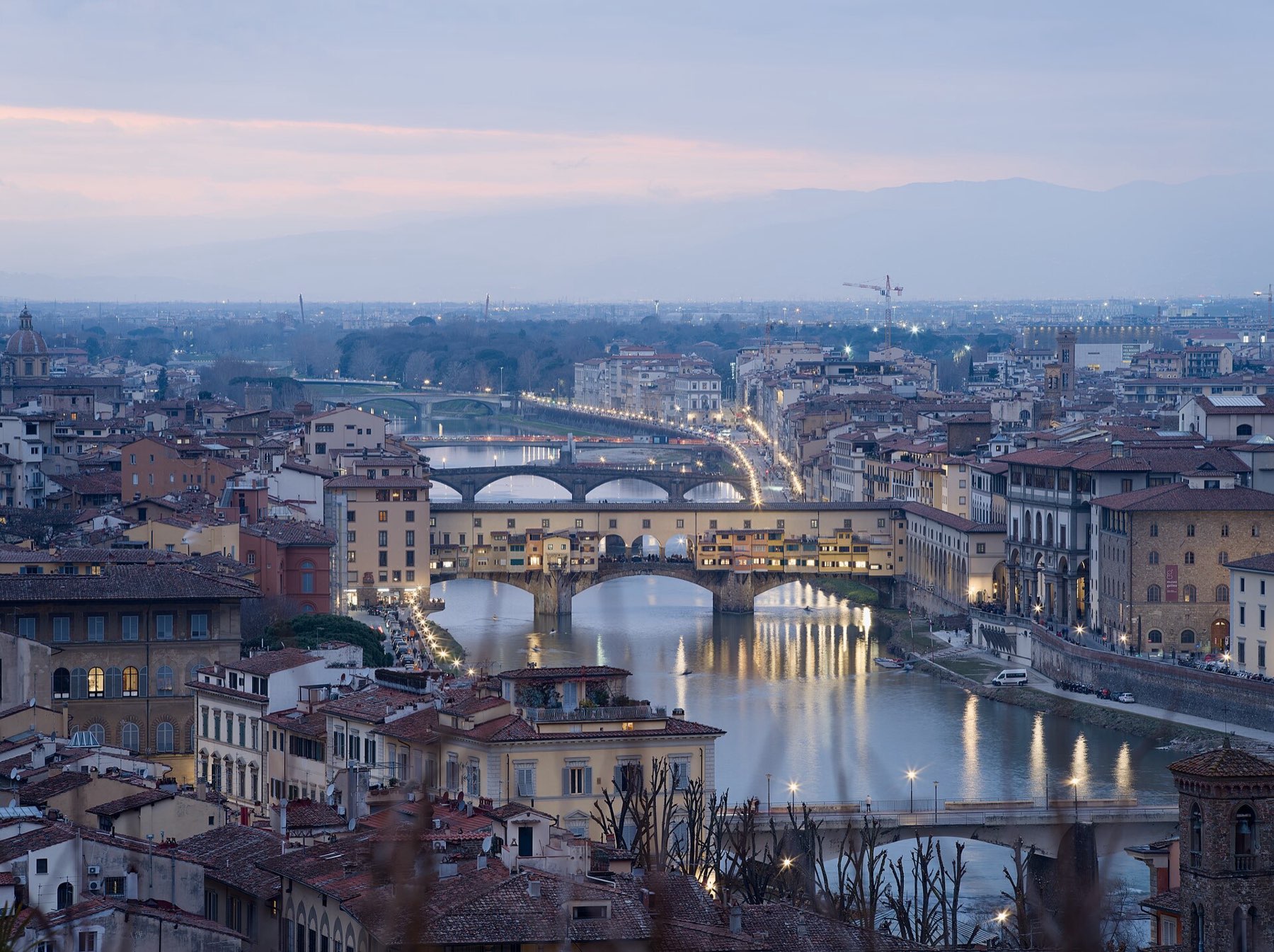
Ponte Vecchio is a medieval bridge lined with jewelry shops. It is photographed millions of times per year. It is cramped, pickpocket-prone, and offers nothing to do except buy overpriced gold chains or take selfies. The view from it is decent. The experience of being on it is suffocating.
Instead, book the Vasari Corridor. This is a private passageway built in 1565 that runs from the Uffizi, over Ponte Vecchio, and into the Pitti Palace. It is half a kilometer long, contains paintings and sculptures, and walks you across the Arno with almost no crowds. Admission is 14 EUR on top of your Uffizi ticket, and you must book it when you book the Uffizi (it is not a separate ticket).
The corridor closes without notice for restoration. As of July 2026, it was open but check uffizi.it before booking. The experience lasts twenty to thirty minutes and is one of Florence's best-kept secrets among tourists.
If the corridor is closed, skip Ponte Vecchio entirely. Walk the Lungarno instead, the riverside path south of the Arno. It is quieter, safer, and the light on the river at sunset is better.
Pitti Palace and Boboli Gardens: One of these, not both.
Pitti Palace is an enormous residence with multiple museums inside. Boboli is a formal garden behind it. Together they eat a full day. Pick one based on your mood.
Pitti Palace itself costs 16 EUR for the Palatial Apartments alone, or 30 EUR for all museums combined (Palatial Apartments, Gallery of Modern Art, Costume and Fashion Museum, Silver Museum, Porcelain Museum). Hours are 8:15 a.m. to 1:50 p.m. Monday to Friday, 8:15 a.m. to 5:50 p.m. Saturday and Sunday. Closed Tuesdays. Book at uffizi.it.
Boboli Gardens cost 12 EUR standalone, or 16 EUR combined with the Palatial Apartments. Hours are 8:15 a.m. to 4:30 p.m. November to February, 8:15 a.m. to 5:30 p.m. March and October, and 8:15 a.m. to 6:30 p.m. April to September. Closed the first and last Monday of each month.
Recommendation: do Boboli Gardens if the weather is clear and you want a break from museums. Bring a book, sit under the cypress trees, and recover. Allow two hours. Skip the Pitti Palace museums. They are repetitive if you have already done the Uffizi and Bargello. The Costume Museum is specialized and worth it only if fashion history matters to you.
Santa Maria Novella and Other Churches: Which ones matter?
Florence has dozens of churches. Most tourists see one per day as they walk past. Only a few are worth entering.
Santa Maria Novella is the best. It has frescoes by Masaccio that changed the history of painting. Admission is 7.50 EUR. Hours are 1 p.m. to 5 p.m. Monday to Friday, 10 a.m. to 5 p.m. Saturday, and 1 p.m. to 5 p.m. Sunday. Book at smn.it. Allow one hour.
Santa Maria del Carmine has the Brancacci Chapel, which holds Masaccio frescoes that influenced Michelangelo. Admission is 10 EUR for the chapel, 6 EUR for the church. Hours are 10 a.m. to 5 p.m. Wednesday to Monday. Closed Tuesdays. Allow forty-five minutes.
San Miniato al Monte sits high on a hill south of the Arno. It is a Romanesque church with a view of the entire city. Admission is free. Go at sunset. Allow one hour including the walk uphill. This is a genuinely quiet place in Florence, which is rare.
Skip the Basilica of the Holy Cross unless you care about Dante's tomb. Skip the Baptistry. Skip Orsanmichele. They are fine if you have two weeks and nothing else to do.
Accademia Gallery vs. Uffizi vs. Bargello: Which one first?
Your choice depends on energy and time.
| Museum | Focus | Hours | Price | Time Needed | Crowds | Verdict |
|---|---|---|---|---|---|---|
| Uffizi | Renaissance painting | 8:15, 18:50 (closed Mon) | 20 EUR | 3-5 hours | Very heavy | Do it on day 2, 3 if you book ahead |
| Accademia | David sculpture, painting | 8:15, 18:50 (closed Mon) | 12 EUR online | 1 hour | Heavy | Skip if short on time |
| Bargello | Renaissance sculpture | 8:15, 17:50 (varies) | 12 EUR online | 2-3 hours | Light to moderate | Do it on day 1. Fewer crowds |
Recommendation: Start with Bargello. You will absorb more because you are fresh and the crowds are manageable. Do Uffizi next when you are accustomed to Renaissance art. Skip Accademia unless you have five or more days in Florence.
Day trips from Florence: Worth the train ride?
Florence is the hub. You can reach smaller Renaissance towns by regional train in under two hours.
Siena is fifty-five km south. The train takes ninety minutes and costs 8 EUR return. The town is built around a spectacular piazza. It has a cathedral and a good museum. Spend a full day. Many visitors do Siena as a day trip and regret not staying overnight. The town transforms when daytrippers leave at 6 p.m.
Pisa is eighty km west. The train takes ninety minutes and costs 10 EUR return. The Leaning Tower is real. It leans. You can climb it for 18 EUR. The cathedral is more beautiful than the tower. Pisa is smaller and quieter than you expect. Day trips are reasonable here. Most people overestimate how long Pisa needs (it needs four hours, not eight).
Villa d'Este and Villa d'Este are not near Florence. Ignore that suggestion. Villa d'Este is near Rome.
Chianti wine region is thirty km south. Regional buses leave Florence hourly. It is hilly, rural, and good for wine tasting if that interests you. Most tourists stay longer in Florence and skip it. You will not regret that choice.
Recommendation: skip day trips if you have fewer than five days in Florence. The city itself needs that time. If you have a week, do Siena as an overnight trip or Pisa as a day trip. Do not do both.
Markets, food, and what to buy: Real tips, not clichés.
Central Market (Mercato Centrale) is a covered market with leather, produce, and tourist trinkets. It is crowded. The food stalls upstairs are decent but overpriced for tourists. Locals shop here, but the ground floor is tourist zoning at this point. Go if you want to see it. Do not expect a revelation.
San Lorenzo Market (Mercato di San Lorenzo) is outdoors and sells leather jackets, scarves, and cheap souvenirs. Haggle is expected. The quality is mixed. This is where you buy a leather jacket if that matters to you. Otherwise, skip it.
Leather from these markets: be skeptical. "Made in Florence" on a tag means nothing. Much of it is imported. If you want quality leather, go to a real leather craftsman like Leather School (at the Basilica of the Holy Cross). You will pay more and get better goods.
Food: eat where Italians eat, not where signs say "Tourist Menu." Oltrarno (the neighborhood south of the Arno) has better restaurants than the city center. A proper meal costs 12 to 18 EUR. Expect to wait for tables, especially dinner. Do not eat near major monuments. The markup is surreal.
Gelato is good in Florence. It is also good everywhere in Italy. It is not a destination on its own. The best gelato is no better than good gelato.
When to visit Florence: Honest seasonal advice.
April to May: warm, fewer crowds than summer, flowers blooming. This is the best time to visit. Expect 15 to 20 degrees Celsius. Book museums one to two weeks ahead.
June to August: hot (28 to 32 degrees Celsius), packed with tourists. Museums are crowded. The city becomes a theme park. If you must come then, visit museums very early (8:15 a.m. openings) or very late (after 4 p.m.). Plan to spend afternoons resting in a cafe.
September to October: warm and fewer crowds than summer. September is still warm and reasonably busy. October is quieter and slightly cooler. This is the second-best time to visit. Book one week ahead.
November to March: cool (5 to 12 degrees Celsius), rainy, fewer crowds. Museums are less crowded. The light is grey and sometimes beautiful. Spring is better than winter for most people. Plan indoor time. Expect closures: some smaller museums reduce hours or close entirely in February.
Recommendation: visit in April, May, September, or October. Avoid June, July, August entirely if possible. If you cannot, spend your time in small churches and less-famous museums where locals actually go.
Practical information: What you actually need to know.
Language: English is spoken in tourist areas, museums, and hotels. Away from them, Italian is needed. Learning "Please," "Thank you," and "The bill, please" opens doors. Download Google Translate offline if your phone allows it.
Transport: Florence's city center is walkable. A three-day tram pass costs 30 EUR. Most tourists never need it. Taxis are expensive. The city is compact enough to walk across in thirty minutes.
Card payments: Florence is not cash-only anymore, but many small restaurants and shops prefer cash. Withdraw EUR at ATMs. Do not exchange money at exchange offices. The rates are terrible.
Pickpockets: they exist on crowded trams and in the Uffizi queue. Keep your phone and wallet on you, not in a bag. Do not display expensive cameras or jewelry. This is common sense, not paranoia.
Toilets: most museums have them. Cafes require you to buy something. There are few public restrooms. Plan accordingly.
Phones: buy a local SIM (Vodafone, TIM, Wind) at the airport or main station for about 10 EUR with data. It is cheaper than international roaming. WiFi is available at most hotels and many cafes.
How many days do you need in Florence?
Three days: Uffizi, Duomo (dome), Bargello. You will see the highlights and feel rushed.
Four days: add Accademia or a day trip, plus time for walking and eating.
Five to six days: Uffizi, Accademia, Bargello, Duomo, Pitti/Boboli, churches, and breathing room.
A week or more: everything above, plus day trips to Siena or Pisa, time for neighborhoods like Oltrarno, and the ability to return to a favorite museum.
Recommendation: five days is the sweet spot. Four days works if you skip Accademia and move quickly. Three days is survival, not tourism.
Budget breakdown for a five-day visit.
Museums (Uffizi, Accademia, Bargello, Dome climb, Vasari Corridor): 76 EUR.
Accommodation (3-star hotel or good Airbnb): 80 to 120 EUR per night for two people, 40 to 60 EUR per person per night.
Food (breakfast, lunch, dinner, no alcohol): 40 to 50 EUR per day per person at non-tourist restaurants.
Transport (tram pass if you need it): 30 EUR for three days or nothing if you walk.
Total per person: roughly 350 to 450 EUR for five days excluding flights.
Best tours and tickets
Curated from Viator. We may earn a commission if you book, at no extra cost to you.

Tuscany Day Trip from Florence: Siena, San Gimignano, Pisa and Lunch at a Winery

Small-Group Wine Tasting Experience in the Tuscan Countryside
Another option: tickets on Headout
Headout is another booking platform. Compare and choose. We may earn a commission at no extra cost to you.


Frequently asked questions
Do I need to book museums in advance in Florence?
What is the best time to visit Florence to avoid crowds?
Can I see the main sights in Florence in two days?
Is climbing the Duomo dome worth it?
What is the Vasari Corridor and should I book it?
Related guides
Florence Autumn 2026: Nine Film Festivals, and Giotto's Bell Tower Under Repair
Florence's 50 Giorni di Cinema returns with nine film festivals, while Giotto's Bell Tower begins a five-year restoration. What to check before you go.
Read more →Florence-Pisa Trains Suspended October 9-11: Plan Around It
Florence-Pisa rail services between Empoli and Pisa are suspended October 9-11, 2026. Check trains early and use the time for Florence art.
Read more →Italy This Weekend: Uffizi Storm Aftermath and Venice Events
Florence's Uffizi had a water leak after a storm on Sept 17. Venice hosts a bike ride, wine festival and sagre from Sept 18-20. What to know.
Read more →Family-Friendly Train Travel in Italy: Discounts and Services
Discover family-friendly train services and discounts across Italy for your next trip.
Read more →Travel Update: Tuscany's Seismic Activity and Florence Events
Stay informed about recent seismic activity in Tuscany and memorable events happening in Florence. Plan your trip wisely.
Read more →Travel Tips for Italy: Late Summer 2026 Insights
Plan your Italy trip with the latest insights, including attractions and travel updates for the summer of 2026.
Read more →All prices and times on this page are ESTIMATES and change often. They are a starting point from an independent editor, never official or guaranteed figures. Always check the final price and the opening hours with the official venue or operator before you book or travel.
Rules, timetables, fares and passenger rights change, and this page is a summary, not an official source or legal advice. Check the official operator or authority before you book or travel, and treat anything critical to your trip as something to confirm, not to assume. Last reviewed: 2026-08-16.